On learning that Bishop Kearney was buried in a tomb within St Canice’s Cathedral;
“I have to admit it was very exciting and it was great to finally prove conclusively that Barack Obama’s sixth generation grand uncle was the Bishop of Ossory who died in Kilkenny city at the Bishop’s Palace in 1813. It is now the headquarters of the Heritage Council."
Local Academic Gabriel Murray
Gulliver's Travels author, Jonathan Swift, attended Kilkenny College in the late 17th century, and a building at the college was named after him in 2007. Swift's fellow students included playwright William Congreve and the philosopher George Berkeley – after whom California’s Berkeley College is named.
The elevation of Kilkenny is 60 metres (200 ft) above sea level. The area of Kilkenny borough is 3.74 square kilometres (1.44 sq mi). Kilkenny is the smallest city in Ireland and although all cities in Ireland are by the coast or along a river Kilkenny is the only city that is not tidal.
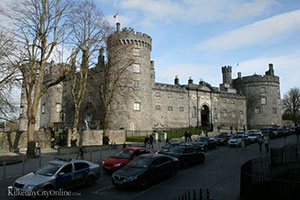
In 1650 invading Cromwellian forces mounted an attack on Kilkenny castle and although it was initially successfully defended they eventually managed to take control of the city by another route.
Nowadays, Kilkenny Castle is effectively three-sided. One of the four walls - and one of the great round drum towers - has disappeared over time.
Where did it go? Well, the Eastern wall and the North-Eastern tower were blown up during the 1650 Cromwellian siege of Ireland.
The annals tell of a terrible massacre which took place in Dunmore Caves, with 1000 people killed by attacking Vikings in 928AD. Over the years there have been numerous finds of human bones, which together with finding of the Viking artifacts, seem to bear out that terrible tale.
Kilkenny Castle has soared past some incredible competition to take the title of the most popular paid visitor attraction managed by the Office of Public Works (OPW) in Ireland.
AKA is a voluntary run arts festival that showcases the hard work and talent of independent artists and community groups across Kilkenny county and city.